
Cuffs, Cables, or Bolts: The Hidden Trade-offs in Treehouse Fastening
When we talk to clients about how we attach a treehouse to a tree, the treehouse attachment bolt can make people wince. Drilling into a healthy tree sounds invasive. After years of building in trees, though, we've learned to judge a fastening method by one thing: how the tree is doing twenty years after we've packed up our tools.
Below, we've gone through the most common methods for treehouse attachment and what each one means for the tree as it grows.
How a TAB works with the tree
The Treehouse Attachment Bolt, or TAB, has been around for roughly 30 years. It started life as the "Garnier Limb" and is now the international standard for high-end treehouse construction. It's what we use on most of our treehouses.
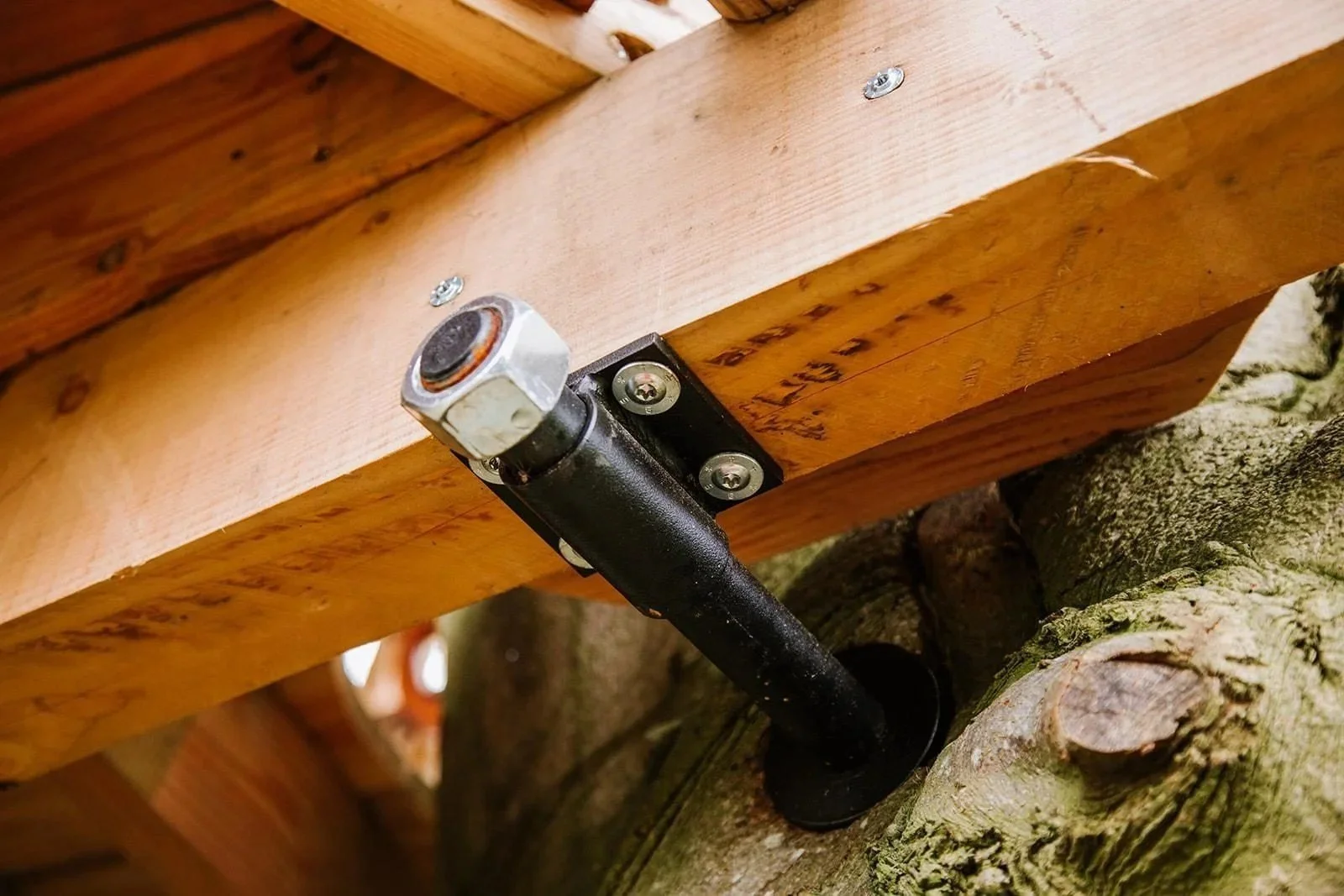
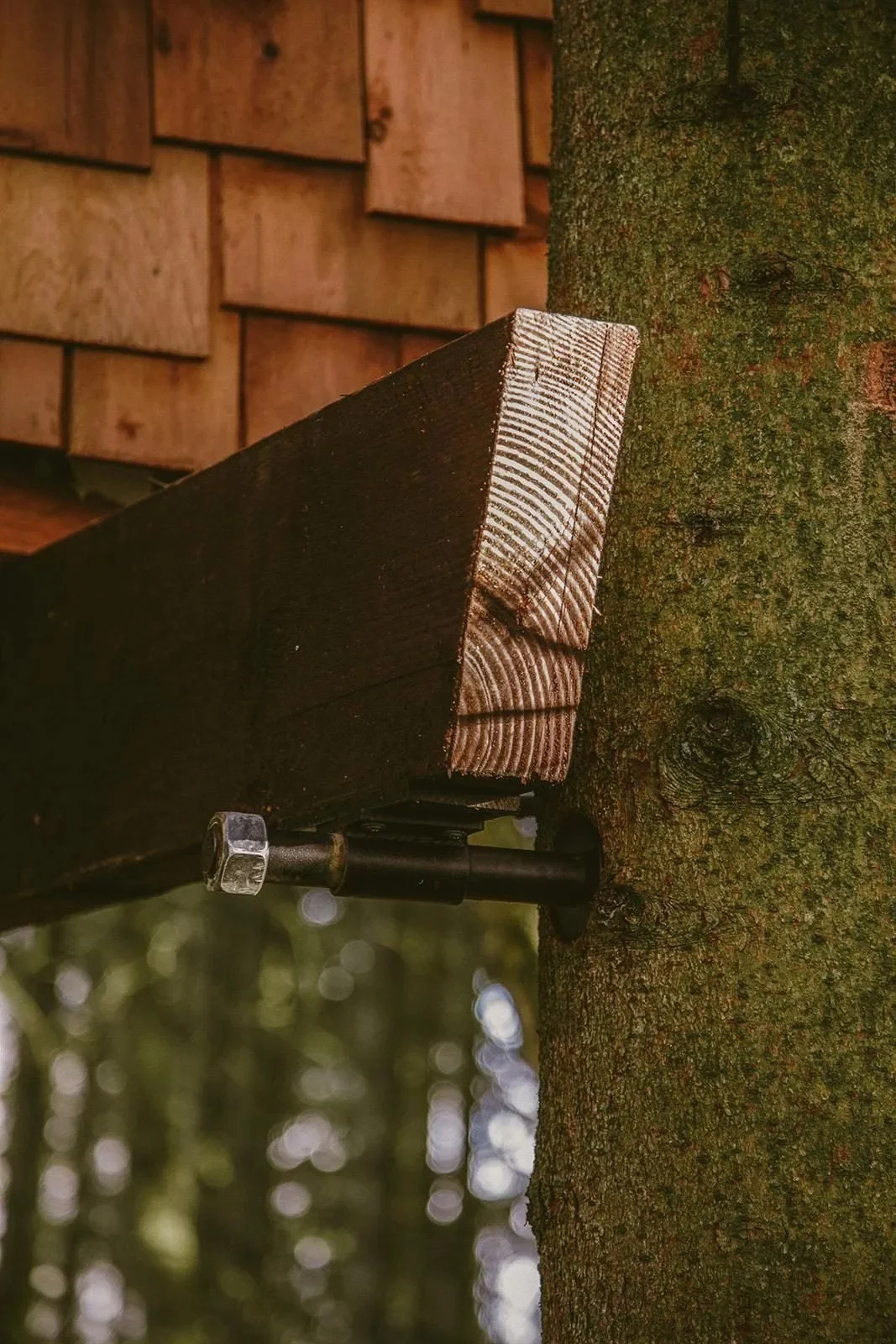
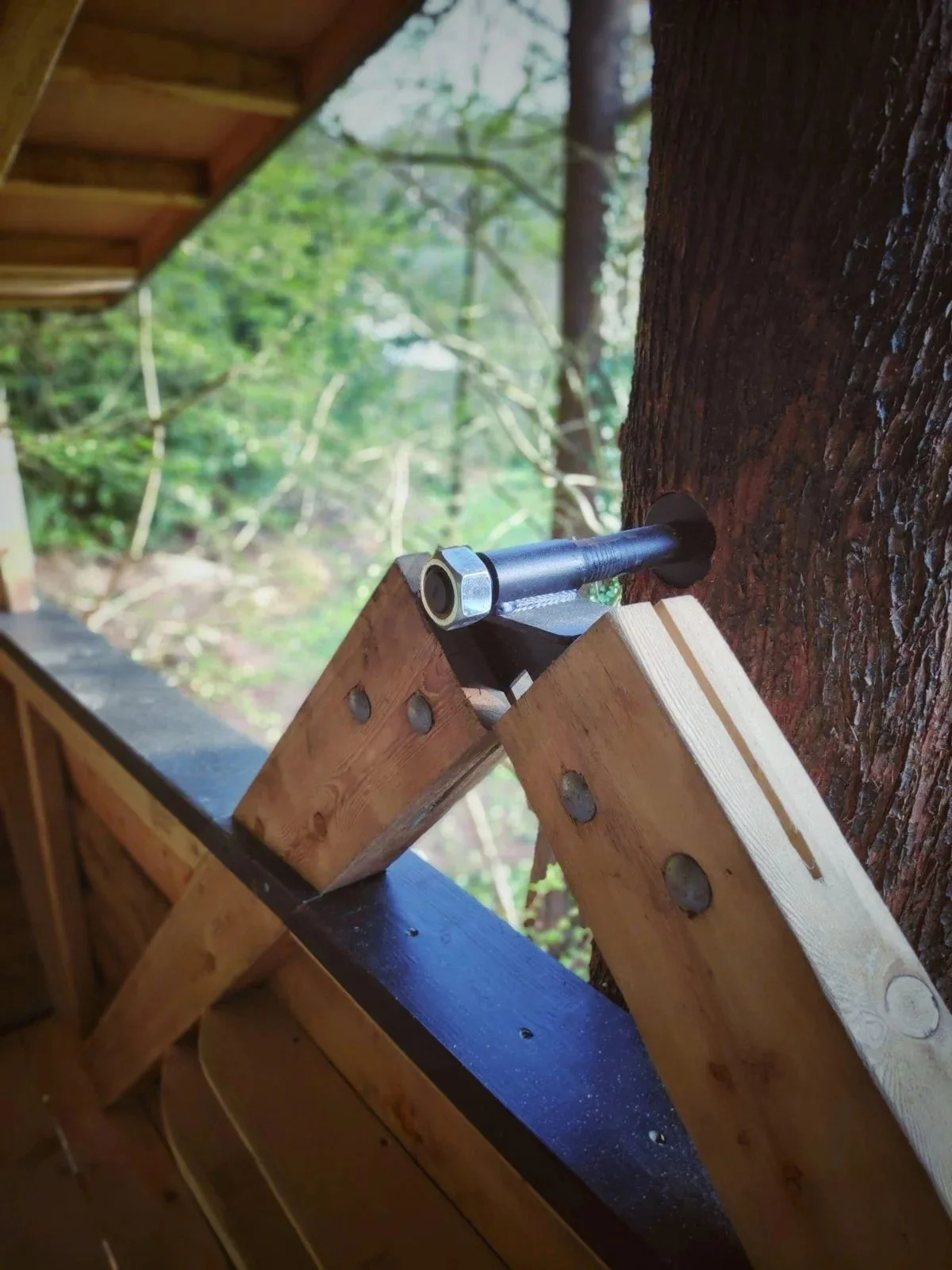
The bolt is designed to behave like a natural branch. It sits in the interior wood, which has no living cells, and the tree responds to the drilled hole in the same way it would to a branch snapping off. It seals the wound, stores substances that stop fungus getting in, and grows stronger reaction wood around the bolt. Give it a few years and the bolt is itself an extension of the tree, with the tree growing around it and making it stronger.
Installing a TAB properly takes experience and specialist kit, and only certain species are suitable. The tree needs a trunk or limb of at least 300mm and a good wound response, which we check before any design work starts. We've written more about the installation process in how we attach a treehouse without harming the tree.
Static and floating brackets
The bracket that sits on the bolt is what makes the TAB such a versatile system of attachment. Where a trunk or limb is big enough that it won't really move, we use a static bracket. This creates a fixed point for our platform to be connected to. Higher up, where branches sway, or if we are using a cluster of trees and there are some trees which are particularly small and will move a lot in the wind, we use floating brackets, which allow the tree 360 degrees of movement. When the wind picks up, the branch can move without dragging the structure with it, and the treehouse doesn't push back on the tree. This key dynamic element keeps the tree healthy by allowing it space to move and grow. By contrast, cuffing or clamping methods of attachment do not allow any movement or space to grow, and as we will explain below, can cause devastating long-term issues.
With the right combination in place, the tree carries on growing and moving freely for the rest of its life, and there's very little maintenance needed once everything is installed. Research collected by treehouse builders worldwide suggests the treehouse attachment bolt method, if installed properly, causes no damage to the tree.
Here are photos from our installations, taken 3 to 4 years after the bolts went in. You can see new growth sealing around each bolt, which shows how well the tree has responded.
Where cable suspension works well
Cable suspension hangs the platform from steel cables. A sling goes around a branch, ideally at a fork so it can't slip, or we use a TAB with a cable attachment point. A turnbuckle then tensions the cable down to an eyelet on the platform. We aim to anchor as close to the centre of the main trunk as we can, with the cable running as near to vertical as possible, so the structure doesn't start swinging.
Done well, it's a really neat system. There's no open wound, it's affordable, and can bear significant load. The height can be adjusted later using the turnbuckle, and everything can be taken down again, which makes it handy for temporary builds. It's also a good option on very soft woods like willow, where installing a TAB is not feasible.
Bark thickness dictates a lot here. Oak and chestnut have thick bark that protects the living layer from the contact with the sling. Beech bark is thinner and wears more easily, so on beech we'd normally use a TAB with a cable attachment point.
Considerations when using cables
The weakness with cables can show in bad weather. Suspended platforms can swing significantly in a storm if the cables are attached to branches which will move a lot, and all that motion gets passed into the treehouse structure. We often combine the cable system with an implant to reinforce the TAB and provide extra strength to support a main beam.
Cuffs and clamps over the years
A cuff is usually a two-part steel ring that closes around the trunk, with steel sections welded on to carry the beams. It's sometimes screwed into the tree as well, to stop it sliding down. It holds on the same way a belt does, through pressure.
A cuff may appear a gentle option for attachment, given nothing is drilled into the tree. This is a dangerous misunderstanding in treehouse construction which can have catastrophic consequences. As the tree grows wider every year, the cuff starts to strangle the tree, crushing the living layer under the bark and restricting the flow of nutrients from the roots to the crown of the tree. In the worst cases, it can completely kill the tree. Studies have found serious problems with tree health often appear 10 to 20 years after a cuff is fitted, and by then the treehouse may not be safe either.
Below are photos of a treehouse we went to inspect for a client who was worried that his treehouse had become dangerous due to the cuffing method used by the original builders.
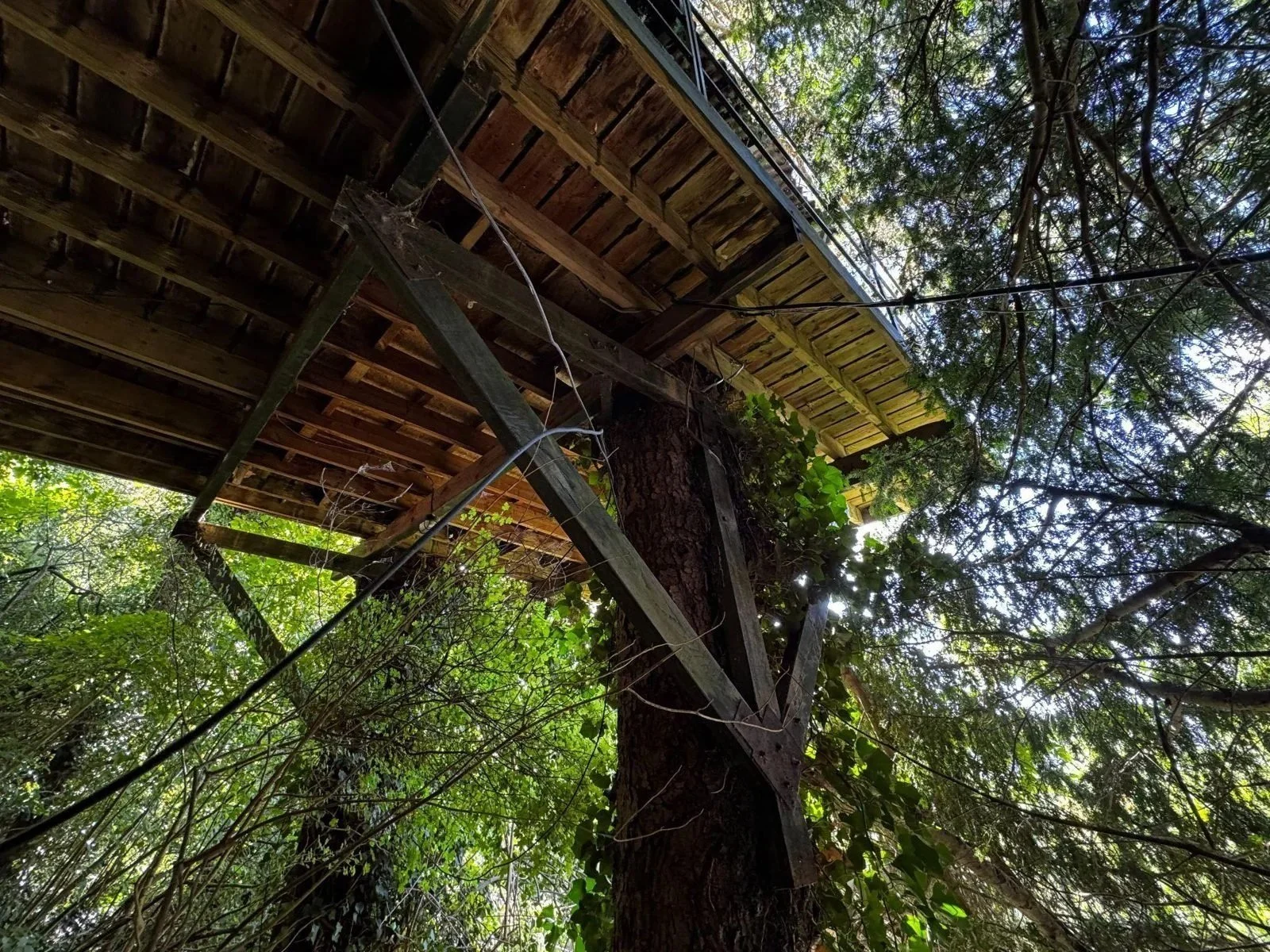
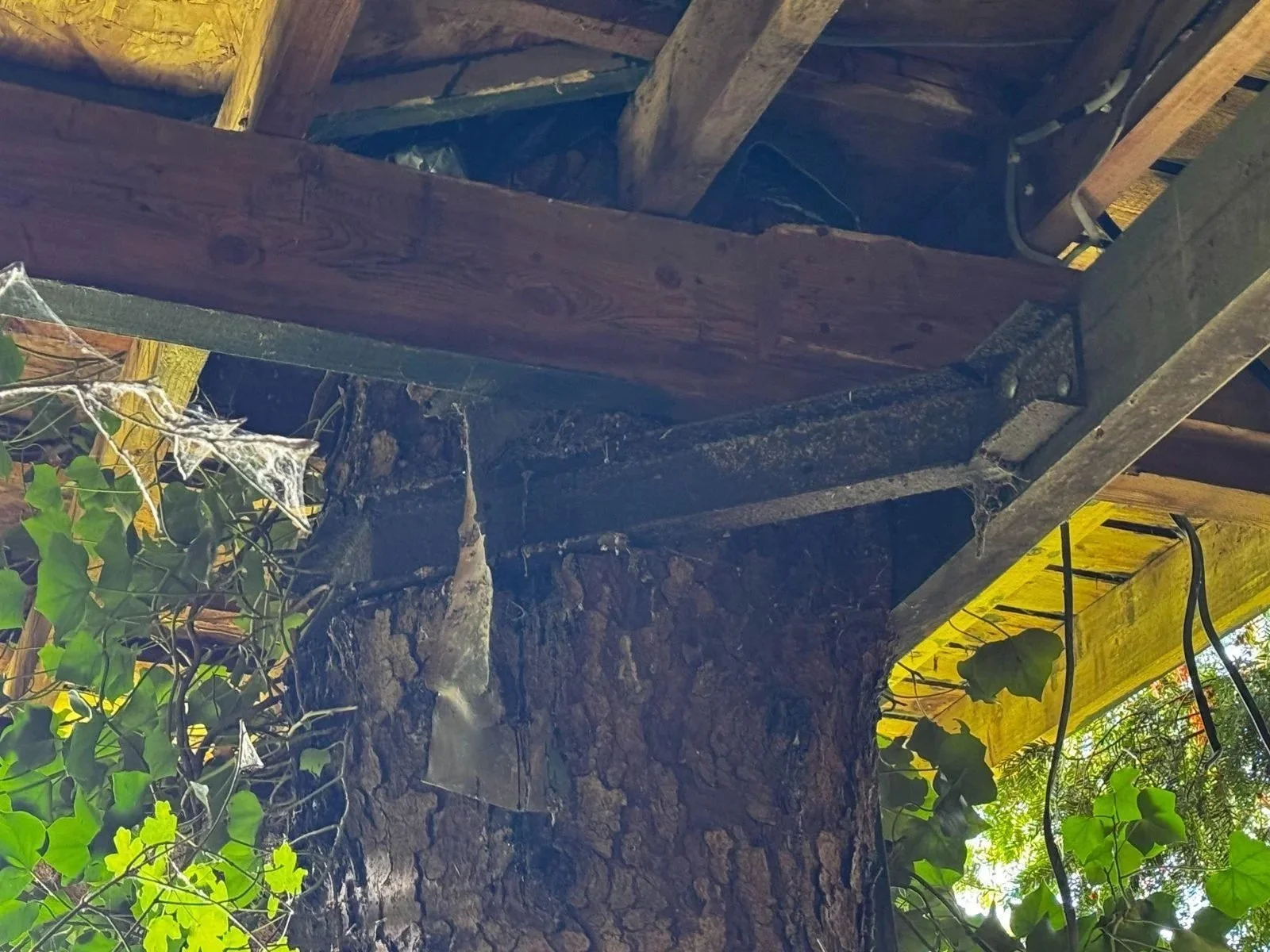
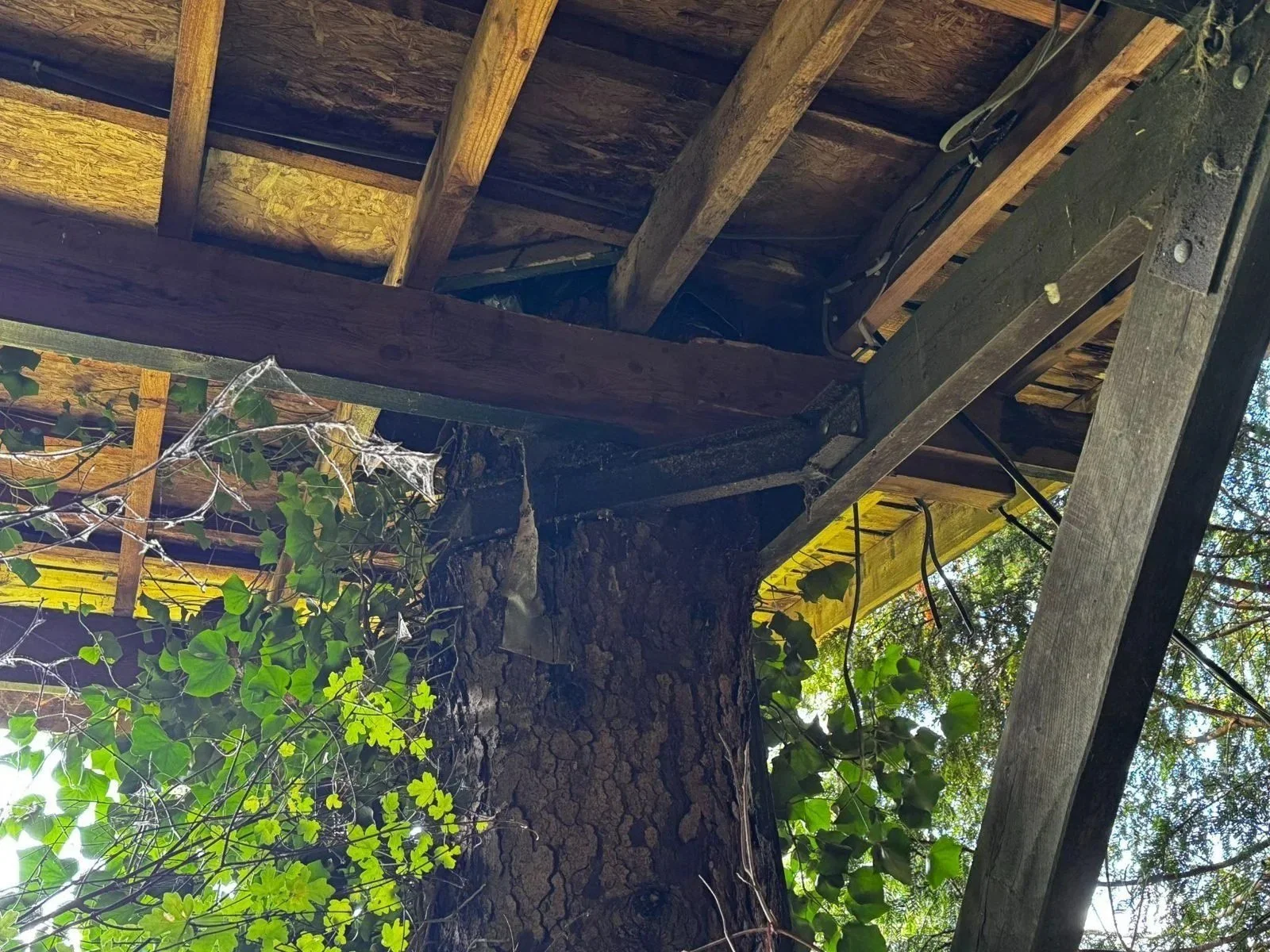
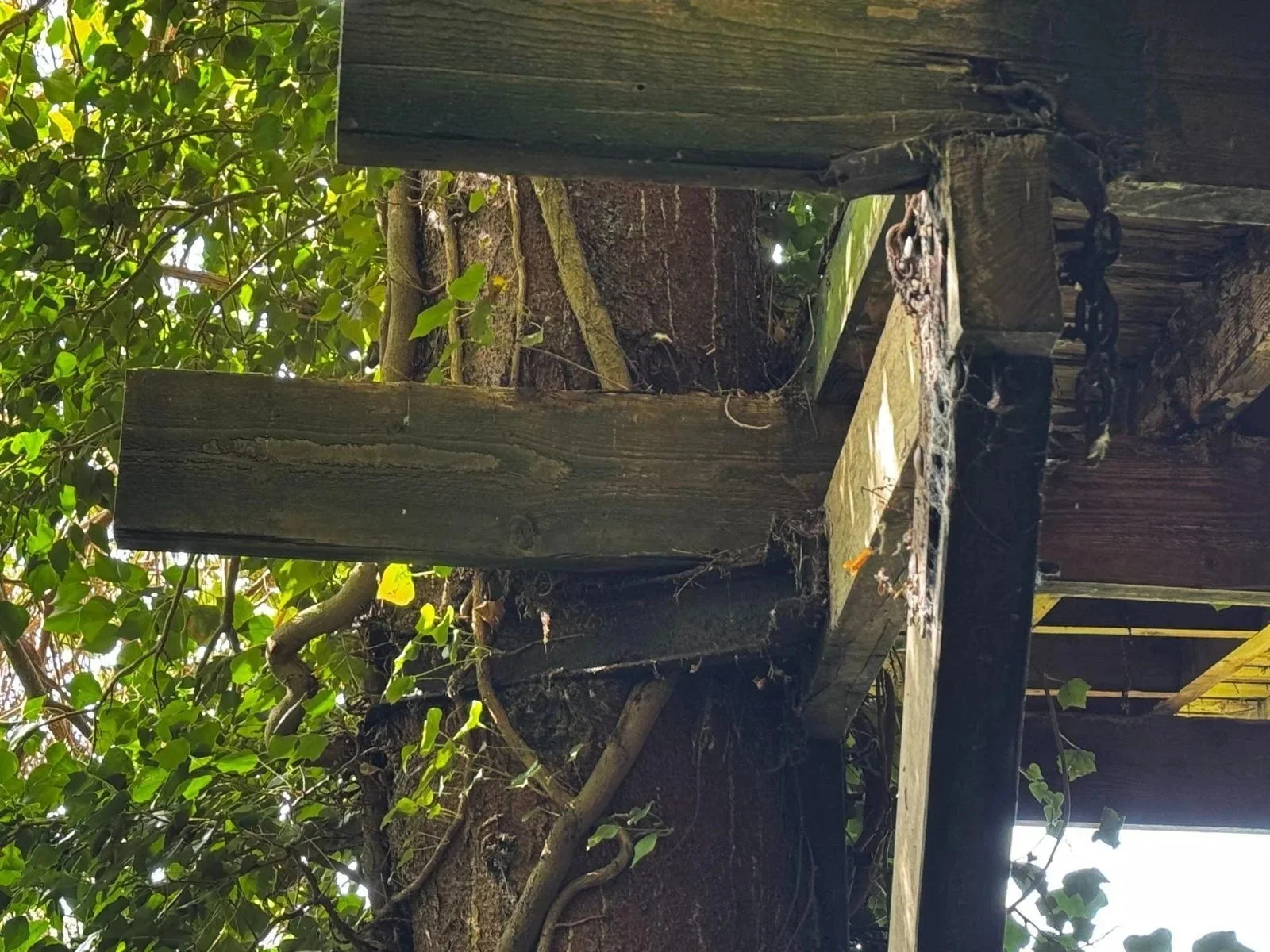
This treehouse is over 15 years old. It was built between two spruce trees and the cuff systems used on each tree to attach the structure have already killed one of the huge spruce trees, and it is likely the second spruce will die soon too. See also how the cuffs have completely strangled the tree and are almost totally embedded within the trunk. The cuffs have not allowed any room for movement, and the structure has started to lean over slowly as the tree grows.
This client now has a big problem on their hands: with one of the trees supporting the structure dead and the other in poor health, the whole structure and the trees are at risk of falling down.
Posts, piles and the roots below
Posts and stilts come in when there's doubt about a tree's health or how much weight it can take. Sometimes a mix of posts and another method is the most sensible way to stop a tree being overloaded. Posts are simple, can hold a lot of weight, and they don't touch the trunk.
The catch is underground. Digging holes and pouring concrete close to a tree can cut through its roots and cause damage to the tree. Posts also change the feel of a treehouse. If it's mostly standing on legs, is it really in the tree any more?
Where we do need a post going to ground, we will often choose to use ground screws, which don't need any digging or concrete. Before each one goes in, we check the soil for roots, and if we find one, the screw moves.
Why we usually choose the bolt
No method is perfect, and every tree is different, but without a doubt the TAB is proven to us to be the most reliable, safe and biologically sound method of attachment for true treehouse construction, not just a ground-supported structure. A cuff hides its risk for years, while a well-placed bolt gives the tree something it already knows how to deal with. Trees have been sealing wounds and growing around damage for millions of years, and a TAB simply puts that ability to use.
That's why we always assess the tree first and pick the fastening method second. You can see the result on The Gracious Treehouse, which is still held up by its TABs years after we built it, with the tree growing and moving freely around them.
If you've got a tree in mind and want to know which approach would suit it, get in touch for a free consultation.